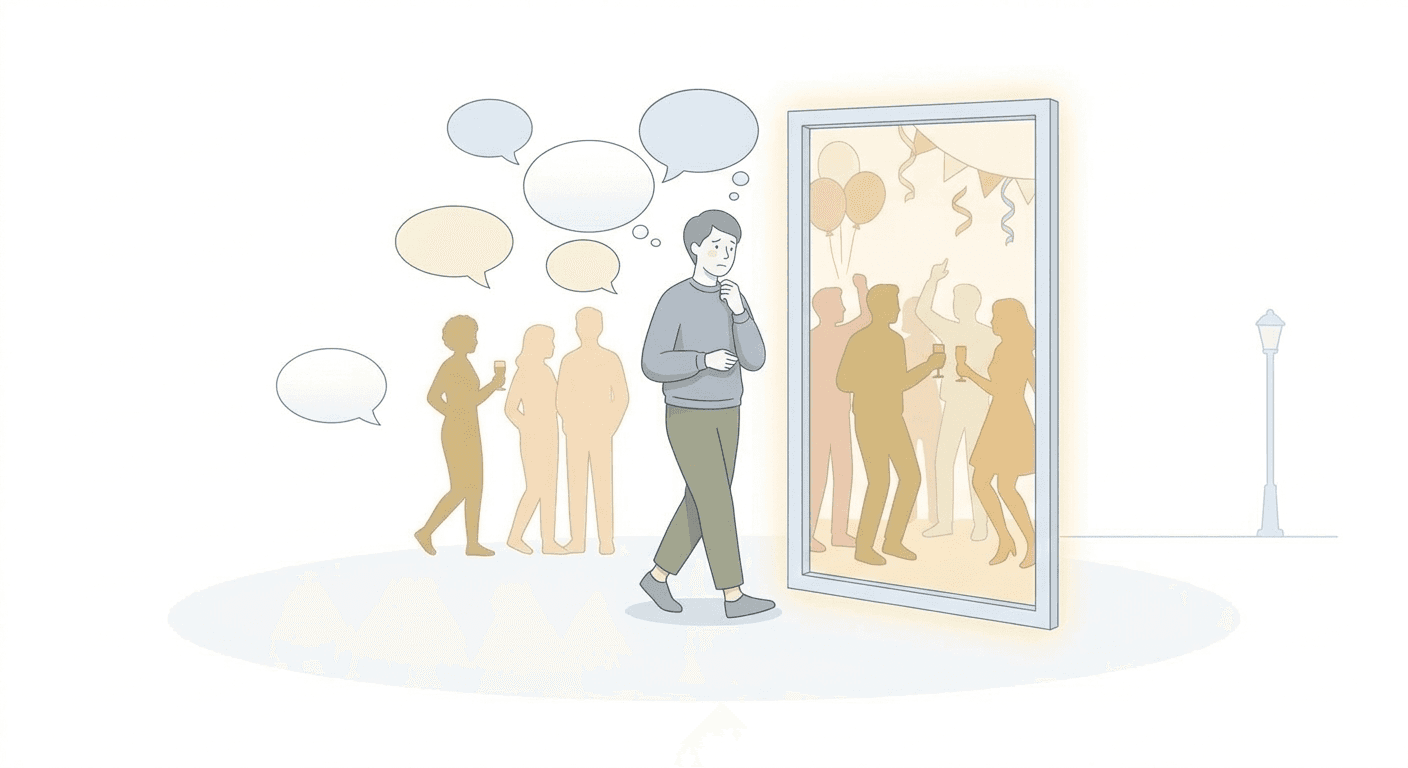
How to Stop Your Mind Going Blank When Talking to People
Find out what causes your mind to freeze during conversations, and learn step-by-step ways to feel more comfortable talking to people.
5 min read • Understanding Anxiety
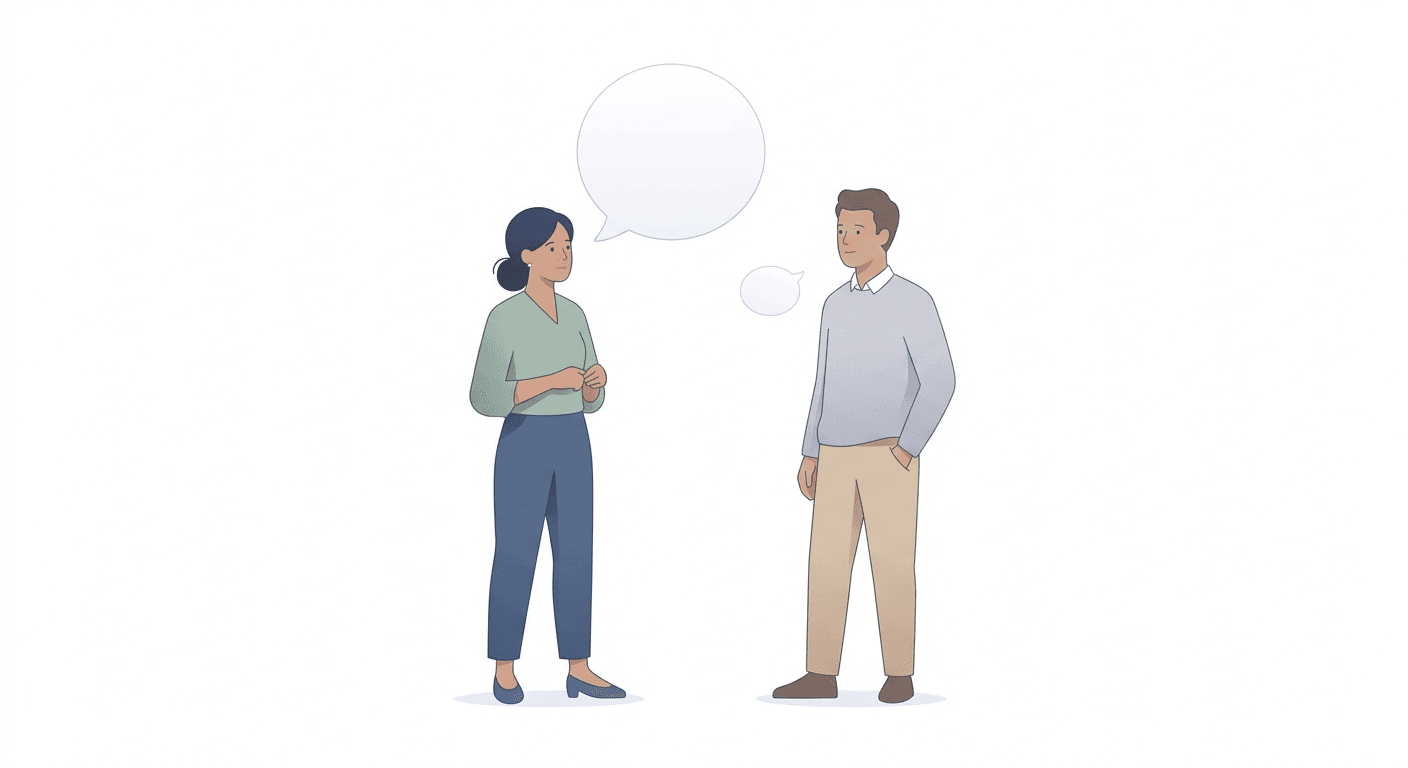
Scenario
Going blank during conversations
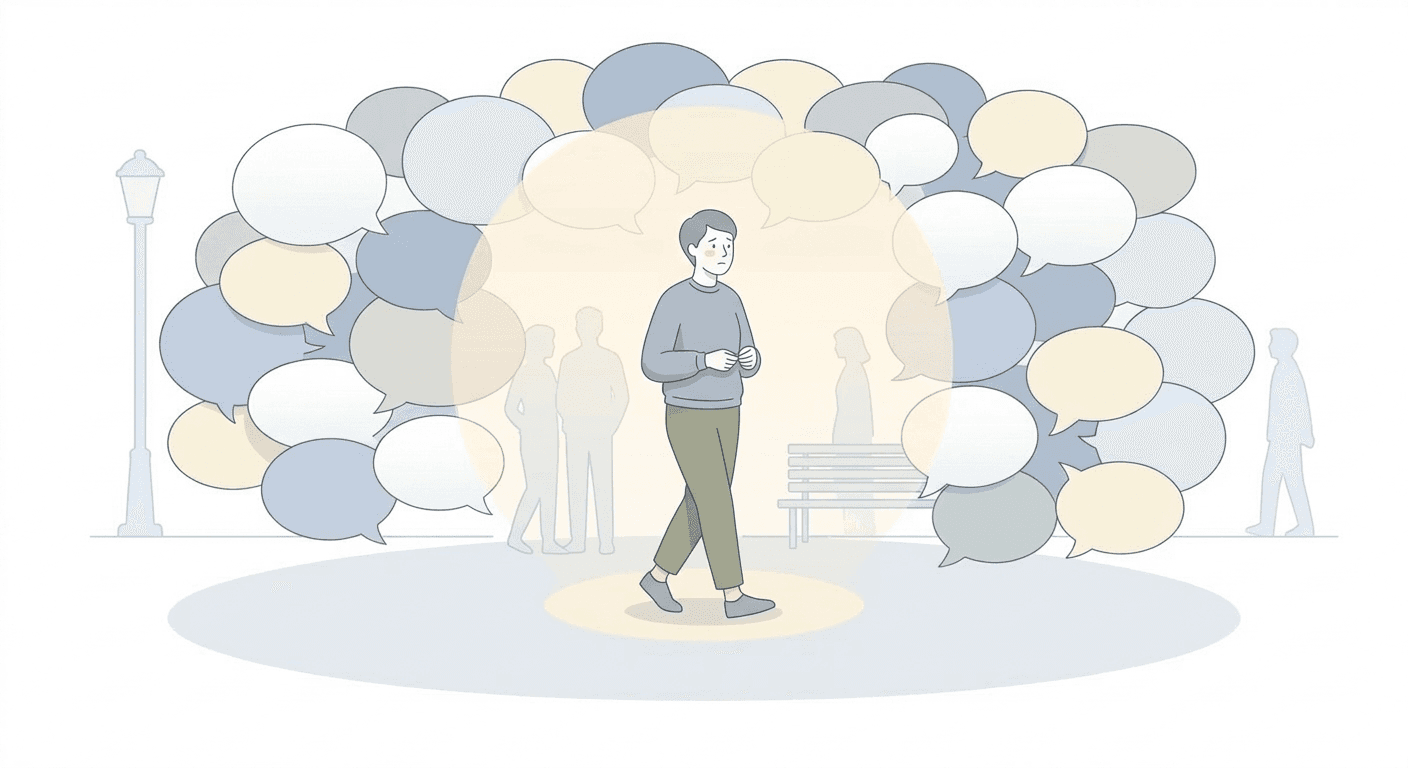
Your mind freezes in social moments because anxiety pulls your attention away from what you want to say and toward worrying about how you look.
What you'll learn
- why this behavior happens
- signs you might recognize in yourself
- exposure steps to gradually reduce it
Key Idea
Going blank in conversations is not a sign that something is wrong with you. When anxiety kicks in, your brain focuses on the danger it thinks it sees instead of helping you find the right words.
Introduction
Many people with social anxiety say their mind goes blank when talking, especially when they feel watched, judged, or pressured to sound confident. In these moments, thinking feels slower, words disappear, and even simple sentences become hard to form. This is a common anxiety response — your brain goes into high alert, which makes it harder to find words and think clearly.
Signs You Might Be Experiencing This
- Your mind suddenly empties during conversations, even when you had something to say a second ago.
- You forget what you were about to say in the middle of a sentence.
- You struggle to find simple words and become super aware of every pause.
- You start watching your own face, voice, and body language instead of listening to the other person.
- You replay the moment afterward and beat yourself up for sounding awkward.
- You avoid talking to people because you are afraid of going blank again.
Why This Happens
When anxiety spikes, your body goes into fight-or-flight mode. That response is helpful for real danger, but not for conversations. Your attention gets pulled toward scanning for threats, and thinking tasks like finding the right words become much harder. So while you are trying to speak, your brain is busy worrying about danger that is not really there.
Mental overload is another big part of it. Social anxiety makes you constantly check yourself: Am I sounding weird? Did that pause look awkward? Are they judging me? All that self-checking uses up the brainpower you would normally use for thinking of what to say. The result is that familiar blank feeling, right when you need your words the most.
Fear of being judged adds even more pressure. If you believe every sentence has to come out perfectly, then normal pauses in conversation start to feel like a disaster. That pressure to be perfect actually makes blanking more likely, not less. The goal is not perfect speech — it is learning that you can stay in the conversation even when anxiety shows up.
Common Thoughts
Why can't I think of anything to say?
Now they think I'm awkward.
Everyone can see I'm freezing.
I should have prepared something to say.
Exposure Ladder
Move through these levels gradually and repeat a level until anxiety starts to settle.
Goal
Take the pressure off coming up with words in real time.
Exercise
Practice short conversations out loud by yourself for 2-3 minutes, using everyday prompts like introductions or asking simple questions.
Expected anxiety
Low anxiety with some self-consciousness.
Why it works
It gets your words flowing again without the pressure of another person.
Why Avoidance Makes Anxiety Worse
Avoiding conversations might feel like relief in the short term, but it teaches your brain that talking to people is dangerous. That makes the freeze response even stronger the next time you try.
Over time, avoiding shrinks your comfort zone. Small interactions start to feel harder, and your confidence drops because you are not getting any new proof that you can handle it. Getting better comes from small, manageable conversations — not from waiting until you feel zero anxiety before you speak.
Avoidance often creates a loop: avoid the situation, feel relief, then feel even more anxiety the next time.
Ollie App
Practice these situations in real life
Ollie creates small real-world practice tasks designed around the situations that make you anxious — including moments when your mind tends to go blank during conversations.
Related Situations
You might also relate to:
How to Handle Presenting in Class With Social Anxiety
How to Stop Rehearsing Conversations in Your Head
How to Feel Comfortable Being Seen in Public