How to Stop Avoiding Parties When You Have Social Anxiety
Understand what makes parties feel so overwhelming with social anxiety, and explore practical steps to gradually face social gatherings.
5 min read • Social Settings
Scenario
Attending social gatherings and parties
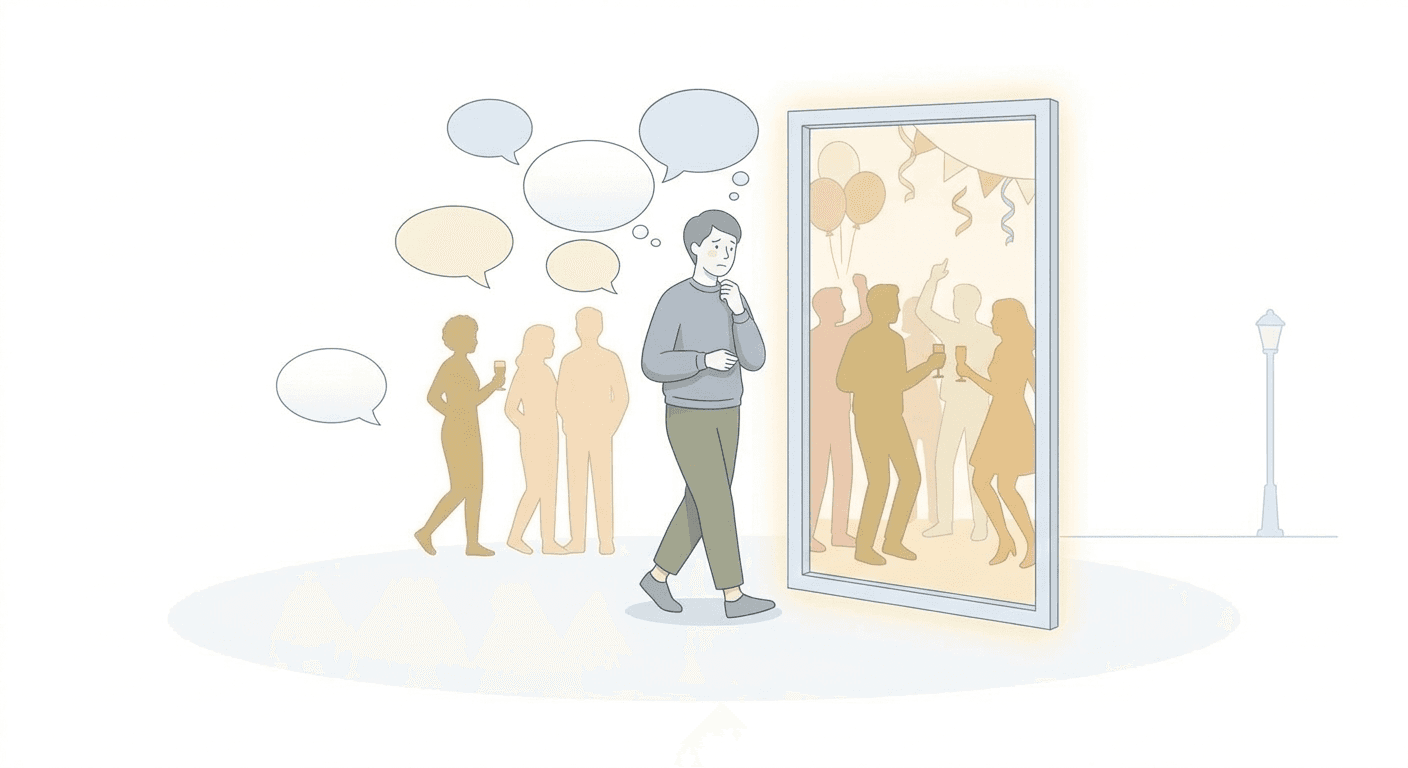
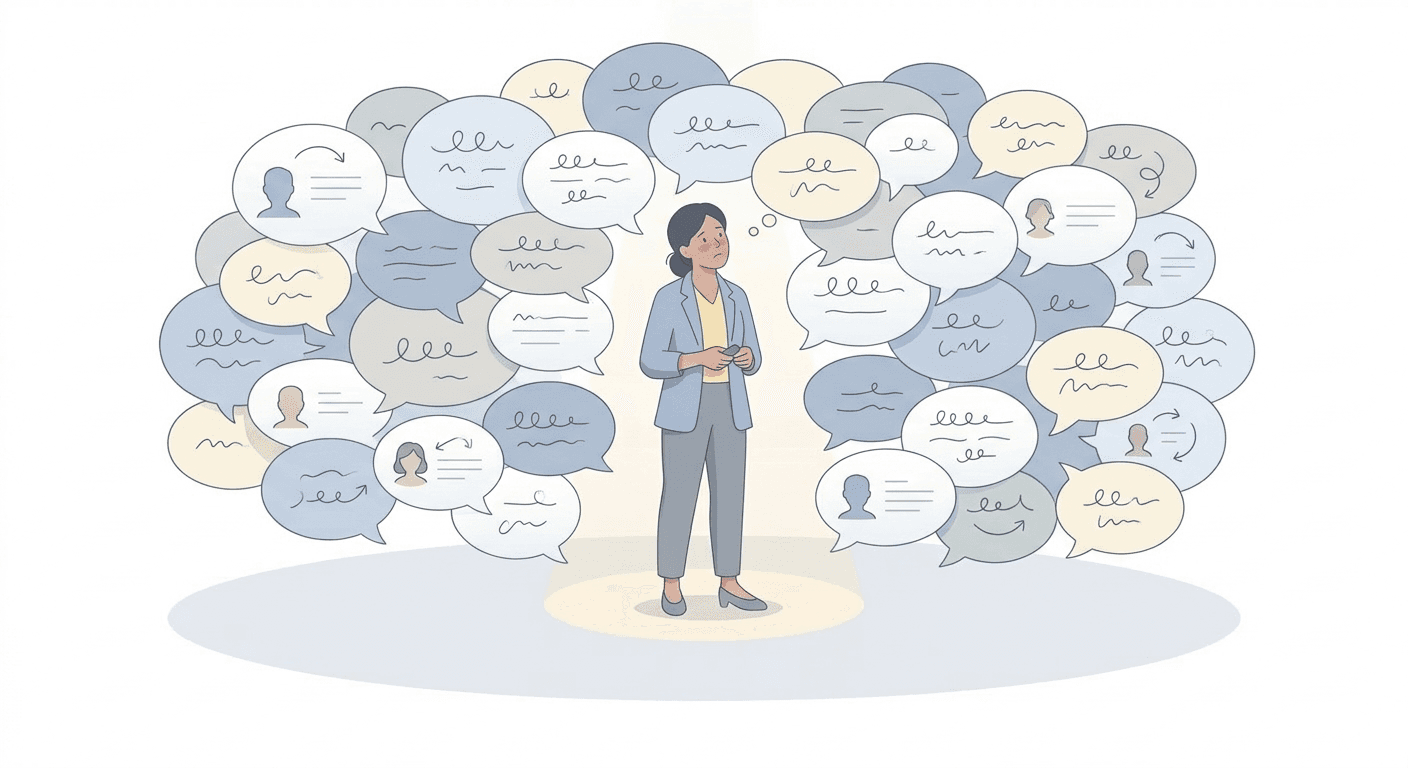
Parties combine noise, unpredictability, and social pressure, which can quickly make you want to leave or not go at all.
What you'll learn
- why this behavior happens
- signs you might recognize in yourself
- exposure steps to gradually reduce it
Key Idea
Party anxiety grows when not knowing what to expect feels dangerous. Gradual practice helps your body learn that social gatherings are uncomfortable, but not actually unsafe.
Introduction
People with social anxiety avoid parties because the mix of unstructured socializing, group conversations, and the pressure to seem confident and relaxed feels overwhelming. Parties take away the predictability that helps you feel safe, leaving you feeling exposed and out of control. With gradual practice, the fear of social gatherings can get a lot easier over time.
Signs You Might Be Experiencing This
- You turn down party invitations regularly, even when you genuinely want to go.
- You feel intense dread for hours or days before a social gathering.
- You arrive late or leave early to spend as little time there as possible.
- You stay near the edges of the room, avoiding the center where you feel more visible.
- You stick close to one person you know and feel panicked if they leave.
- You use your phone as a shield to avoid making eye contact or starting conversations.
- You make excuses at the last minute — headache, tiredness, work — to get out of going.
- After attending, you spend hours replaying everything you said, looking for mistakes.
Why This Happens
Parties are one of the hardest situations for people with social anxiety because they combine several triggers at once. There is no clear script to follow — unlike a work meeting or a classroom where everyone has a role, a party requires you to handle open-ended conversations with multiple people at the same time.
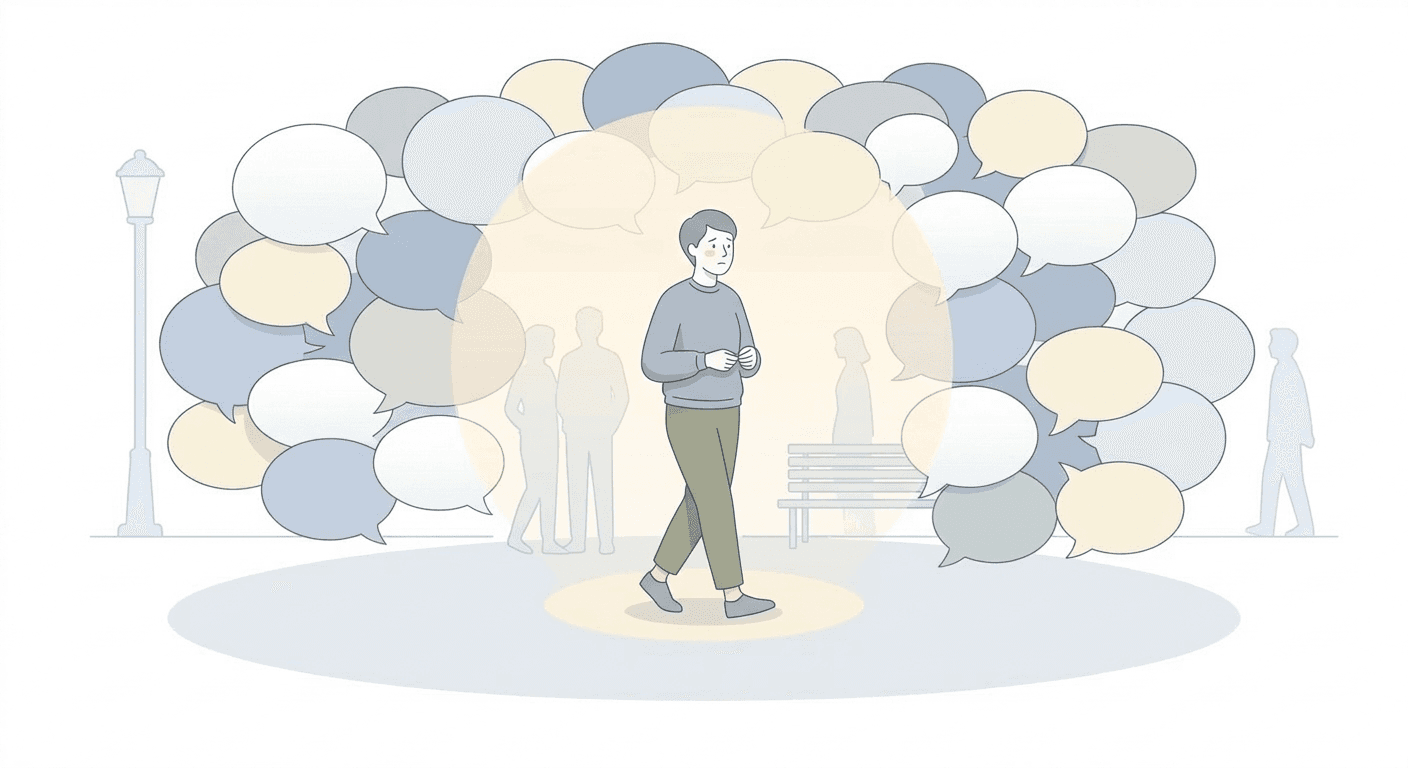
The fear of being judged gets turned up in group settings. You are not just worried about one person — you feel like everyone in the room might be watching and rating how you come across. The belief that you need to be funny, interesting, and relaxed at all times creates a standard that is impossible to meet.
There is also the unpredictability. At a party, you do not know who will come up to you, what they will talk about, or how long each conversation will last. For someone with social anxiety, that unpredictability feels genuinely scary. Your brain cannot prepare for every possible situation, and that lack of control makes you want to run.
Common Thoughts
I won't know what to say and I'll just stand there awkwardly.
Everyone will be in groups already and there won't be room for me.
People will notice I'm nervous and think I'm weird.
What if someone asks me a question and I can't think of an answer?
Everyone else is having fun and I'm the only one struggling.
I should just stay home - it's not worth the stress.
These thoughts feel convincing because they seem like logical conclusions. But they are predictions, not facts — and anxiety is known for making wildly inaccurate predictions about how social situations will go.
Exposure Ladder
Move through these levels gradually and repeat a level until anxiety starts to settle.
Goal
Build confidence in basic social connection with low pressure.
Exercise
Meet one friend for a coffee or a short walk. Keep it one-on-one with no time pressure.
Expected anxiety
Low to mild anxiety at the beginning.
Why it works
It gets your social confidence going without the intensity of a party.
Why Avoidance Makes Anxiety Worse
Canceling plans at the last minute or turning down invitations gives you instant relief. The knot in your stomach goes away, the racing thoughts quiet down, and you feel safe at home. But that relief comes with a hidden cost.
Each time you skip a party, your brain stores a lesson: social gatherings are dangerous, avoiding them is the answer. The next invitation triggers even more anxiety because your brain has even less proof that you can handle it. Over time, the fear grows while your social world shrinks.
Avoiding also creates other problems — guilt about letting friends down, sadness about missing out, and frustration with yourself for not being able to do something that seems easy for everyone else. These feelings pile on top of the original anxiety, making the whole thing feel even heavier.
Avoidance often creates a loop: avoid the situation, feel relief, then feel even more anxiety the next time.
Ollie App
Practice these situations in real life
Ollie helps people who avoid parties by creating practice tasks that build social confidence step by step. Instead of pushing you to attend a big party before you are ready, Ollie creates manageable challenges that slowly expand your comfort zone — starting with the social situations that feel most doable for you.
Related Situations
You might also relate to:
How to Handle Presenting in Class With Social Anxiety
How to Stop Your Mind Going Blank When Talking to People
How to Stop Rehearsing Conversations in Your Head