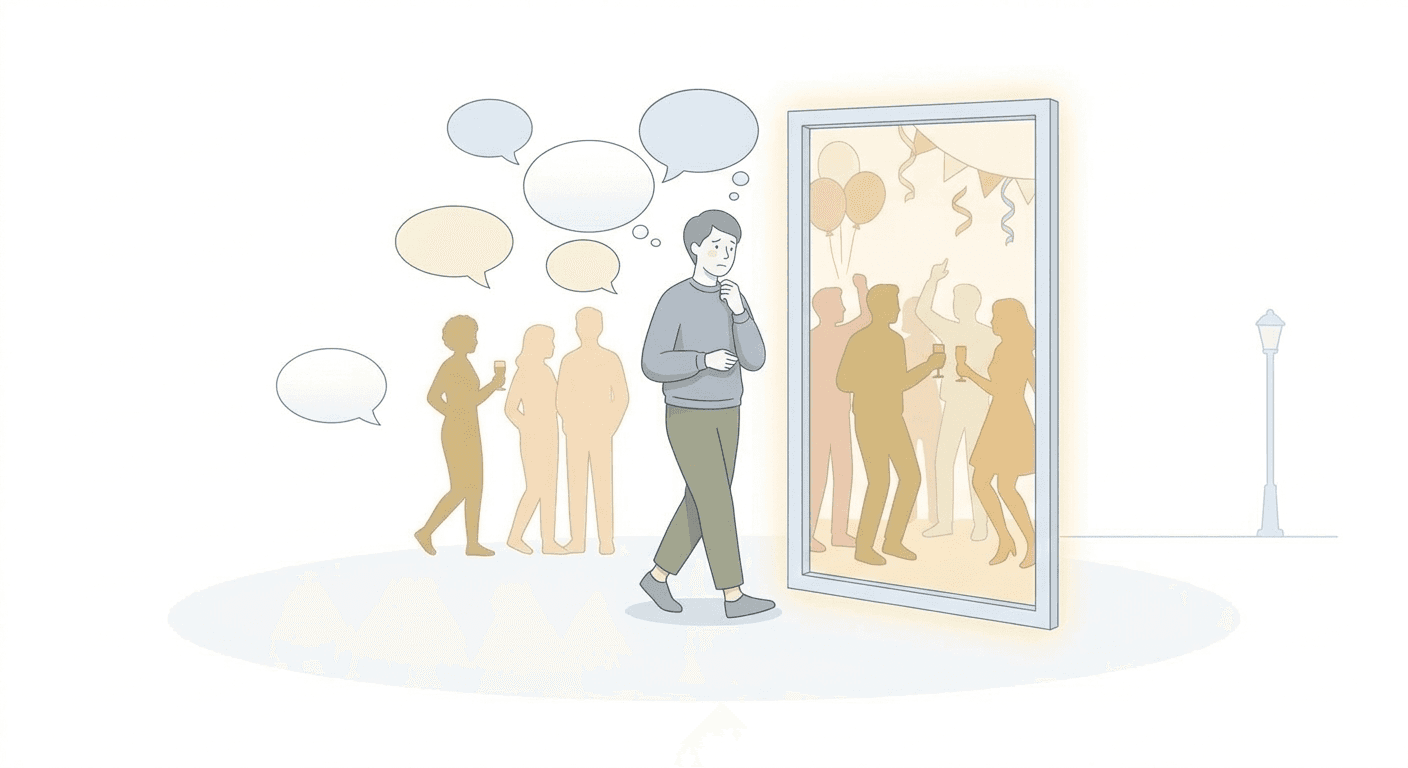
How to Stop Rehearsing Conversations in Your Head
Discover what makes you plan out every conversation in advance, and learn how to break the habit of rehearsing everything in your head.
5 min read • Understanding Anxiety
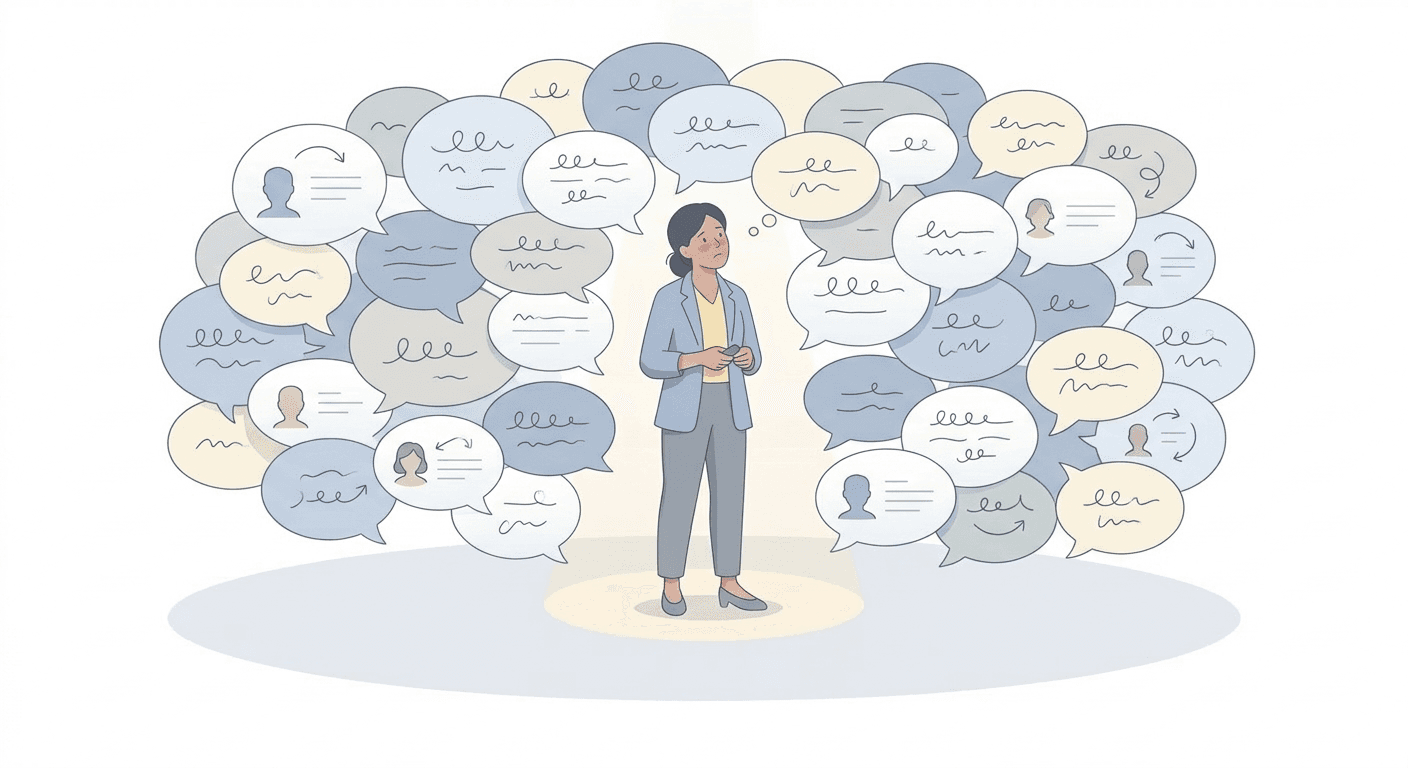
Scenario
Rehearsing conversations before social situations
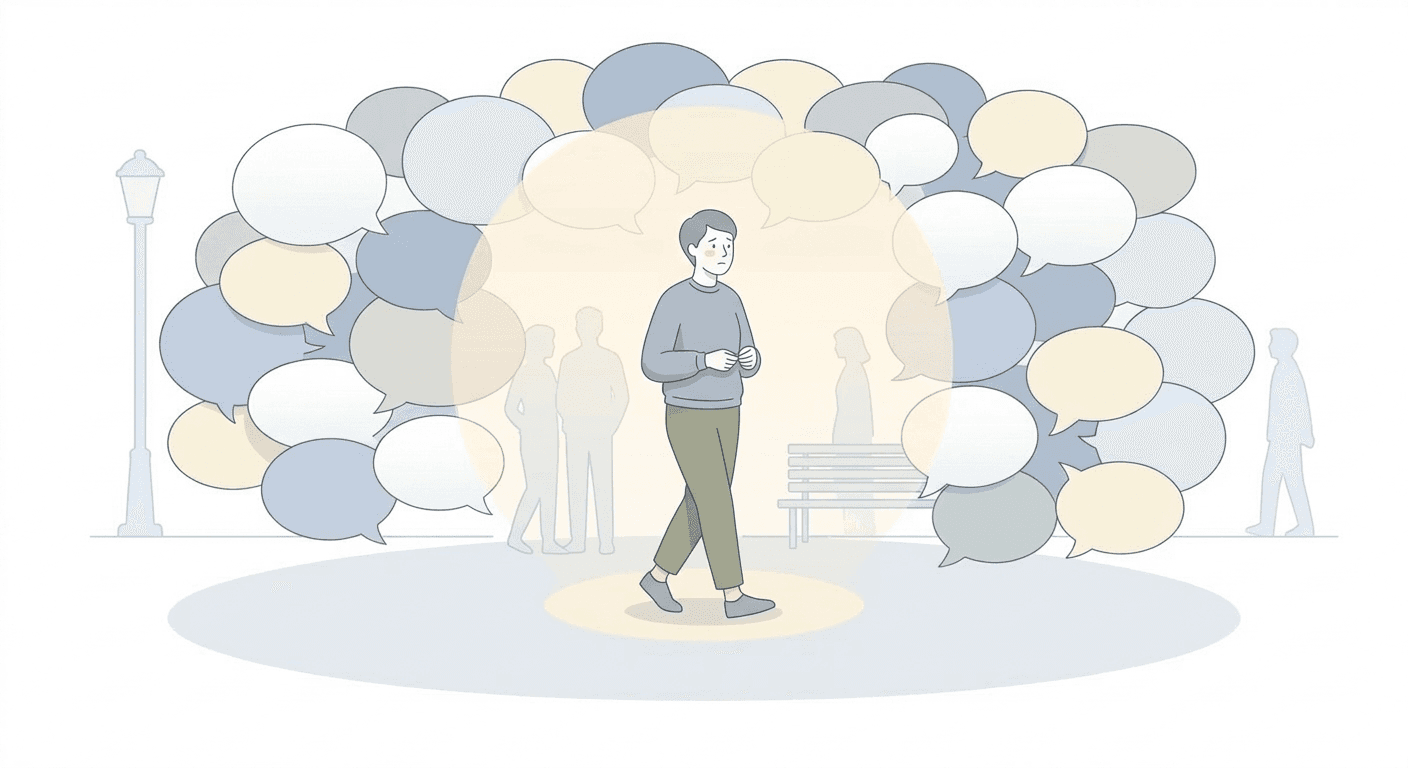
Planning every line can feel like it helps, but it often adds more pressure and makes it harder to talk naturally.
What you'll learn
- why this behavior happens
- signs you might recognize in yourself
- exposure steps to gradually reduce it
Key Idea
Rehearsing feels like it protects you, but it often makes anxiety stronger by teaching your brain that you cannot handle a conversation unless you plan it first.
Introduction
Many people with social anxiety mentally rehearse conversations before social situations because they are afraid of saying something wrong or being judged. Your brain tries to predict every possible outcome so you feel ready, but this usually makes the anxiety worse instead of better. The more you rehearse, the more pressure you put on yourself to say everything perfectly.
Signs You Might Be Experiencing This
- You script out entire conversations in your head before they happen.
- You replay past conversations, picking apart every word you said.
- You prepare multiple versions of what to say depending on how the other person might respond.
- You feel anxious when a conversation goes differently from what you rehearsed.
- You avoid unplanned social interactions because you have not had time to prepare.
- You spend more time thinking about conversations than actually having them.
- You feel mentally drained after social interactions from all the overthinking.
Why This Happens
Rehearsing conversations is your brain's way of trying to control the unknown. When you have social anxiety, unplanned social moments feel risky — any word could be the wrong one, and any pause could be taken the wrong way. So your brain does what it thinks will help: it tries to plan out every possible exchange ahead of time.
The problem is that real conversations are unpredictable. No amount of rehearsing can cover every response the other person might give. When the real conversation goes differently from your mental script, it can feel like everything is falling apart — even when the interaction is completely normal.
This rehearsing is closely connected to the fear of being judged. You are not just planning what to say — you are trying to stop the other person from thinking anything negative about you. It feels like the stakes are impossibly high, so the preparation never feels like enough.
Common Thoughts
What if I say something stupid and they think I'm weird?
I need to have the perfect response ready for every possible question.
If I don't prepare, I'll freeze and have nothing to say.
They'll notice I'm awkward if I don't plan this carefully.
I should have said something different - that was so embarrassing.
Normal people don't have to think this hard about a simple conversation.
The irony is that over-preparing often makes conversations feel more stiff and unnatural, which can make you feel even more self-conscious — the exact thing you were trying to avoid.
Exposure Ladder
Move through these levels gradually and repeat a level until anxiety starts to settle.
Goal
Show yourself that short unplanned interactions are doable.
Exercise
Have a brief, low-stakes exchange with someone — order coffee, say hello to a neighbor, or thank a cashier.
Expected anxiety
Low to mild anxiety that fades quickly.
Why it works
It starts you off in situations where the stakes are low.
Why Avoidance Makes Anxiety Worse
When you rely on rehearsing as a safety net, you never get to find out if you actually need it. Every rehearsed conversation that goes well makes you believe you can only handle social situations if you prepare — and every unplanned moment you avoid makes you more sure you would have failed without it.
This creates a cycle. The rehearsing feels necessary, so you do more of it, which makes unscripted moments feel even scarier, which makes you rehearse even more. The cycle gets tighter until even small, everyday conversations feel like they need serious mental effort.
Breaking this cycle means deliberately having conversations without full preparation and discovering that the outcome is usually fine.
Avoidance often creates a loop: avoid the situation, feel relief, then feel even more anxiety the next time.
Ollie App
Practice these situations in real life
Ollie helps you gradually stop relying on mental rehearsal by creating real-world practice tasks based on what specifically triggers your anxiety. If rehearsing conversations is your pattern, Ollie designs small challenges that encourage you to interact spontaneously in safe, low-pressure settings.
Related Situations
You might also relate to:
How to Handle Presenting in Class With Social Anxiety
How to Stop Your Mind Going Blank When Talking to People
How to Feel Comfortable Being Seen in Public