How to Handle Presenting in Class With Social Anxiety
Learn what makes class presentations feel so scary when you have social anxiety, and follow a step-by-step plan to gradually build your confidence.
5 min read • Exposure Strategies
Scenario
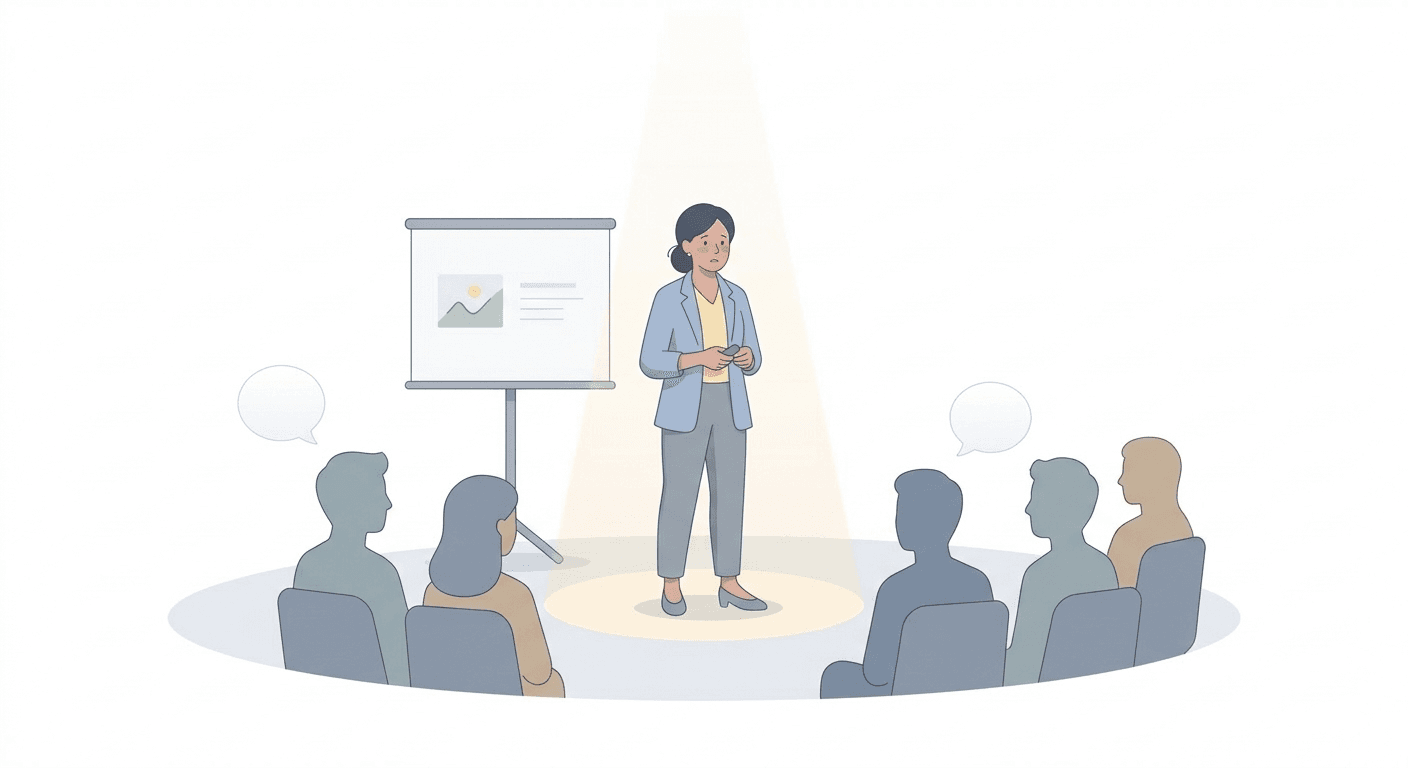
Presenting in front of class
A normal class presentation can feel like a huge test when anxiety and fear of being judged take over.
What you'll learn
- why this behavior happens
- signs you might recognize in yourself
- exposure steps to gradually reduce it
Key Idea
Presentation anxiety stays strong when avoiding feels safer than trying. Small, structured speaking steps show your brain that you can feel anxious and still get through it.
Introduction
Presenting in class is one of the most common social anxiety triggers because it puts you right in the spotlight, where it feels like everyone is watching and judging you. Your brain treats standing in front of a group as something dangerous, which makes your heart race, your voice shake, and your mind go blank. The good news is that by facing this fear in small steps, it can get a lot easier over time.
Signs You Might Be Experiencing This
- You dread presentations for days or weeks before they happen.
- You get physical symptoms like sweating, shaking, or a pounding heart when it is your turn to speak.
- Your mind goes blank mid-sentence, even when you know the material well.
- You avoid classes or think about dropping courses that require presentations.
- You always volunteer to go last, secretly hoping the presentation gets canceled.
- You spend hours over-preparing but still feel completely unprepared when the moment arrives.
- You replay your performance afterward, obsessing over every small mistake.
Why This Happens
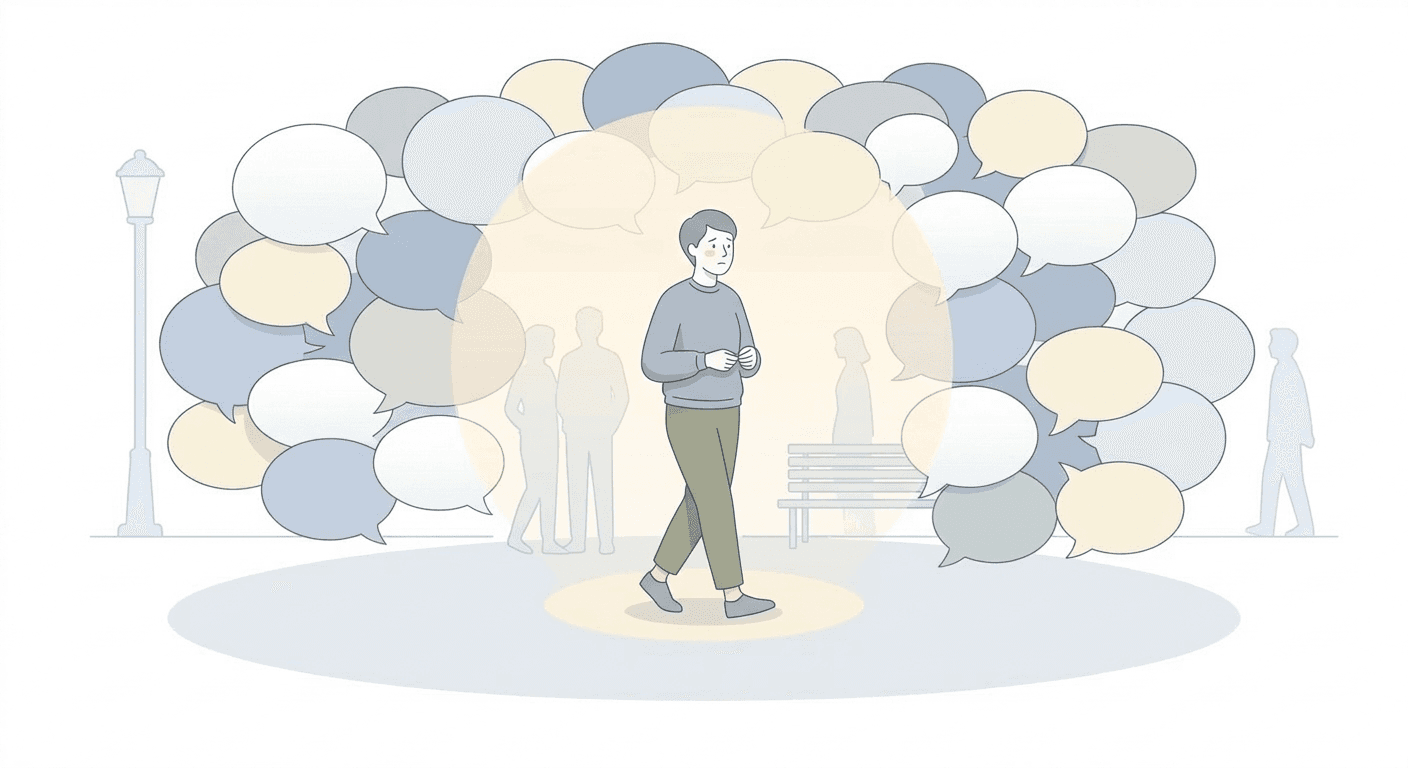
Class presentations bring up several fears at once. The biggest one is the fear of being judged — the feeling that your classmates and teacher are silently picking apart everything you say and do. This is made worse by something called the spotlight effect, where you feel like everyone can see how nervous you are, even though most people barely notice.
Presentations also feel like you are trapped. Unlike a normal conversation where you can pause or walk away, a presentation has a set structure with no easy escape. That stuck feeling makes the anxiety even worse.
If you have had a bad experience presenting before — going blank, stumbling over words, or feeling embarrassed — your brain remembers it as proof that presentations are dangerous. Each time you avoid presenting, that belief gets stronger, making the anxiety worse the next time.
Common Thoughts
What if I completely freeze and can't say a single word?
Everyone will notice my hands shaking and my voice trembling.
They're going to think I have no idea what I'm talking about.
What if my voice cracks in front of everyone?
I'll embarrass myself and people will remember it forever.
Everyone else seems so calm - something must be wrong with me.
These thoughts feel completely real in the moment, but they come from anxiety, not from what is actually happening. Most people listening are far less critical than your brain tells you.
Exposure Ladder
Move through these levels gradually and repeat a level until anxiety starts to settle.
Goal
Get comfortable hearing your own voice while presenting.
Exercise
Practice your presentation alone in your room, speaking out loud as if the audience were there.
Expected anxiety
Low to mild anxiety at the start, then it settles down.
Why it works
You get familiar with the material and it feels less scary to start.
Why Avoidance Makes Anxiety Worse
Every time you skip a presentation, make an excuse to miss class, or ask to submit written work instead, your brain takes that as proof that the situation really was dangerous.
You feel relief in the moment, which keeps the cycle going: avoid the scary thing, feel better, believe the fear was right. The problem is that this pattern gets worse over time. The next presentation feels even scarier because you have less proof that you can handle it.
This is the avoidance cycle, and it is the main reason social anxiety gets worse when you do not face it. Breaking the cycle means facing the fear in small, doable steps.
Avoidance often creates a loop: avoid the situation, feel relief, then feel even more anxiety the next time.
Ollie App
Practice these situations in real life
Ollie is designed to help you work through situations exactly like this. Instead of asking you to jump straight into a full class presentation, Ollie creates small, personalized practice tasks based on what specifically makes you anxious.
Related Situations
You might also relate to:
How to Stop Your Mind Going Blank When Talking to People
How to Stop Rehearsing Conversations in Your Head
How to Feel Comfortable Being Seen in Public